
Spout Pouch Guide: Spout Types, Cap Sizes and Fill Volumes
November 05, 2026
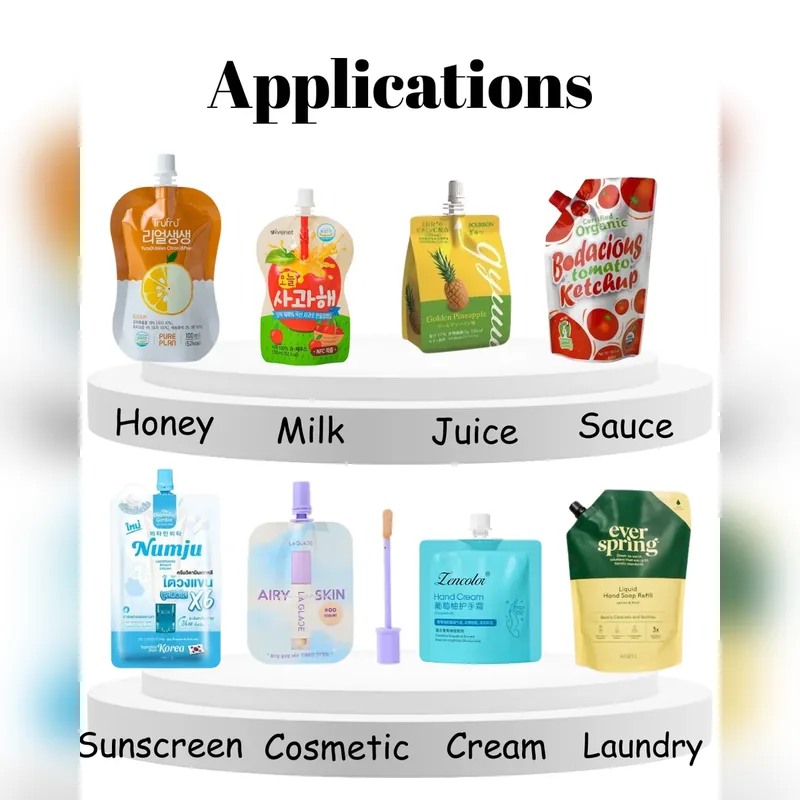
A spout pouch is specified by three things: where the spout sits, how wide the cap opening is, and how much the pouch holds. Centre spouts suit stand-up retail packs, corner spouts pour thick sauces cleanly, and top spouts work for refill pouches that hang or sit on a shelf. Cap diameter then follows the product's flow rate, from 8.6 mm for thin liquids to 20 mm for sauces and chunks.
Spout position
Centre spout, set into the top panel, is the default for juice, puree and dairy alternatives. The pouch stands upright, the spout is centred for balance, and the cap can be printed to match the brand. Corner spout moves the opening to one top corner so the pouch empties almost completely when tipped; it is the usual choice for ketchup, mayonnaise and pastes.
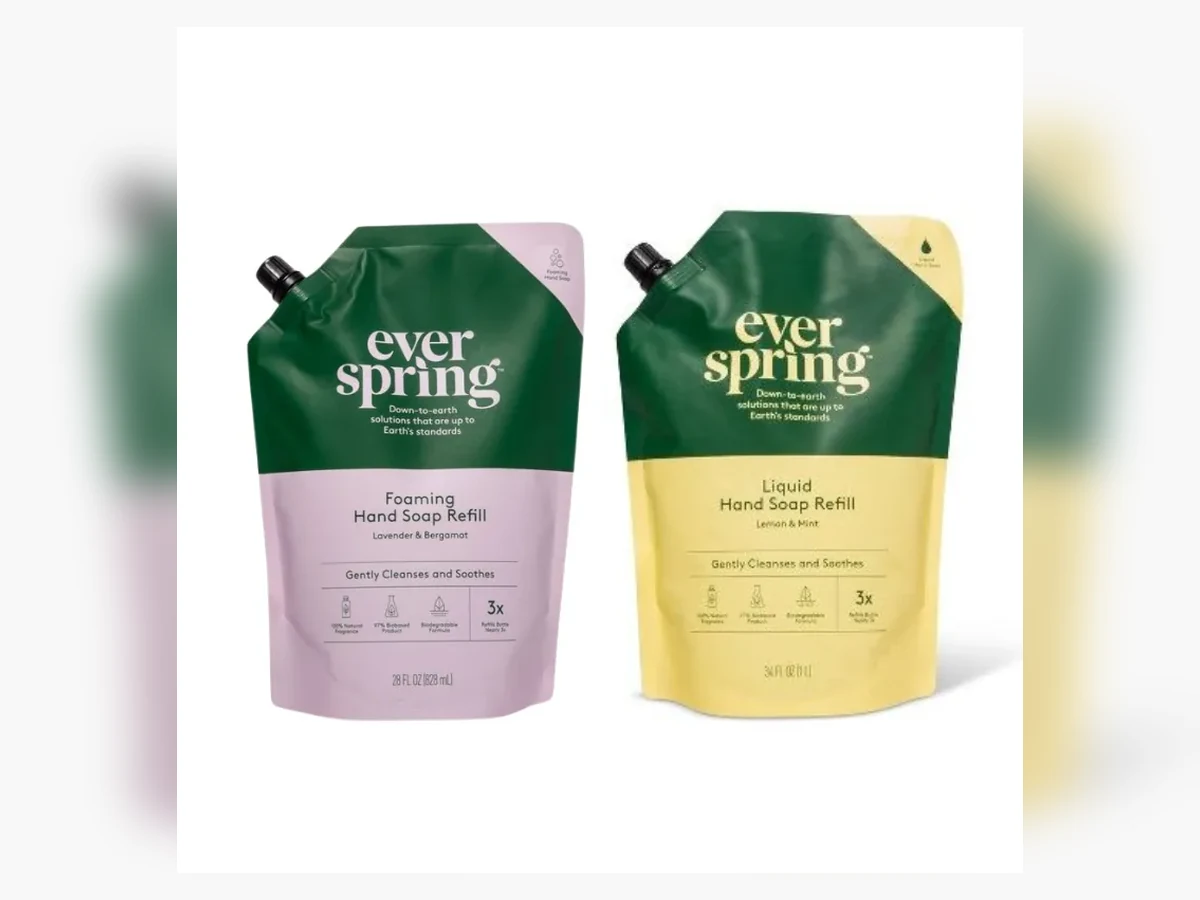
Top spout with a hanging hole suits refill packs displayed on a peg, and side spout is used when the pouch sits in a dispenser or a box.
| Spout type | Typical volume | Best for | Notes |
|---|---|---|---|
| Centre top | 100 ml–5 L | Juice, puree, dairy, water | Balanced for shelf display |
| Corner | 200 ml–1 L | Ketchup, sauce, paste | Drains fully, harder to stand after opening |
| Top with hang hole | 500 ml–3 L | Refill, detergent, soap | Peg or shelf, needs a sturdy header |
| Side | 1–20 L | Bag-in-box, dispensers | Requires a fitment welded into the side panel |
Cap sizes and flow
Cap diameter is chosen against viscosity. A 8.6 mm spout is fine for water and thin juice but frustrating with a thick smoothie. A 16 mm spout handles most sauces, and 20 mm is used where the product contains pieces or the pack is filled and emptied by machine.
| Spout / cap | Typical use | Flow | Fill method |
|---|---|---|---|
| 8.6 mm | Water, thin juice, dressing | Slow | Manual or automatic |
| 10 mm | Juice, iced tea, liquid sweetener | Medium | Automatic |
| 16 mm | Sauces, puree, yoghurt | Fast | Automatic |
| 20 mm | Chunky sauce, detergent, refill | Very fast | Automatic with wide nozzle |
Barrier and fill temperature
Structures follow the product's sensitivity. PET/AL/PE gives the highest barrier for oxygen- and light-sensitive products. PET/PE and BOPP/PE are used where a moderate barrier is enough. For hot fill, the seal layer must tolerate the fill temperature, and the pouch needs a cooling step before packing; for retort, a different structure and a retort-grade spout are required.
State the fill temperature on the enquiry. A pouch built for ambient fill will fail at the spout weld if it is filled at 85 °C.
Leak and drop testing
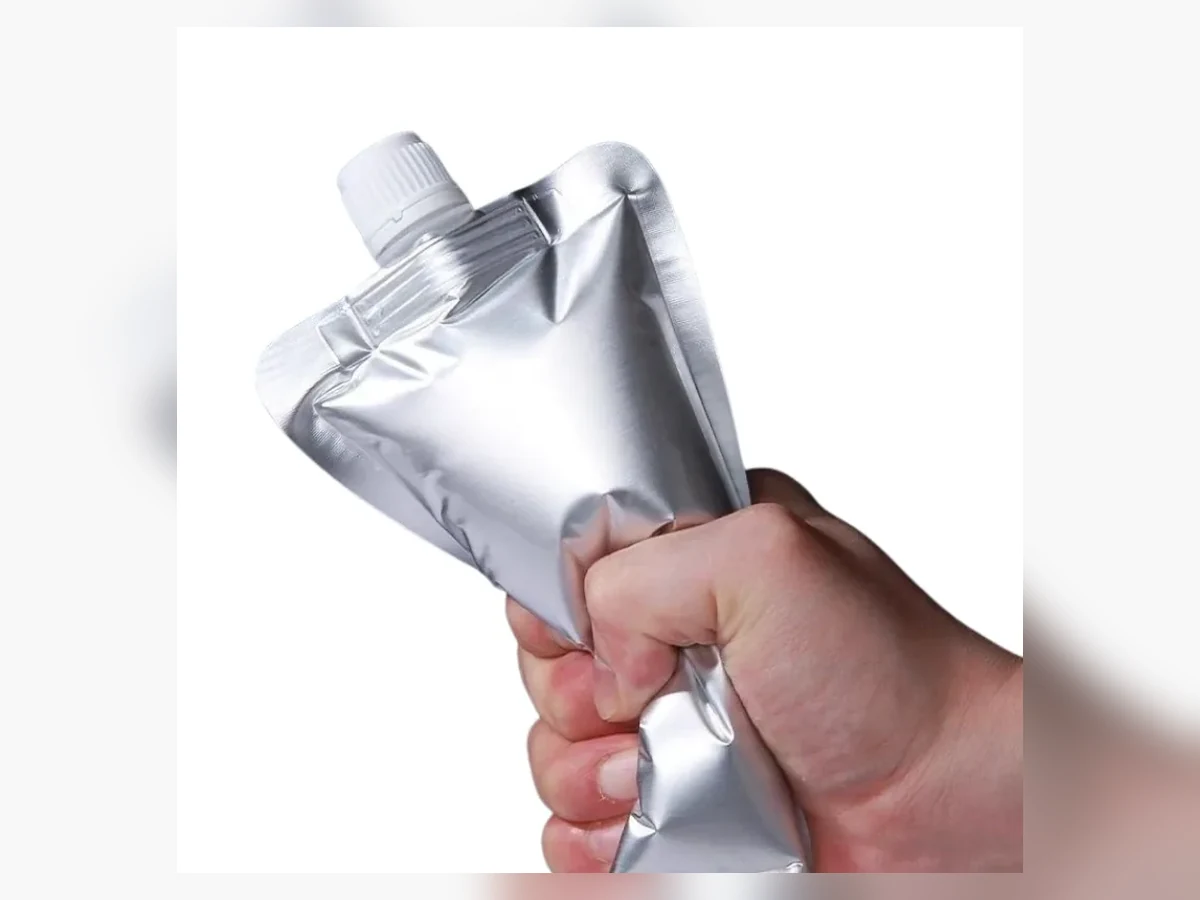
Ask for a pressure decay test on the finished pouch and a drop test from 1.2 m on a filled pack. The spout weld is the usual failure point, and it fails more often on corner spouts because the weld sits on a curve.
Frequently asked questions
Can a spout pouch be retort sterilised?
Only with a retort-grade structure and spout. Standard spouts deform at retort temperatures, so the specification has to be agreed before sampling.
What is the minimum order for custom printed spout pouches?
Typically 10,000 pieces for gravure printed pouches; digital printing allows smaller runs at a higher unit cost.
Is a spout pouch recyclable?
Mono-material PE or PP structures are the recyclable route; multi-material structures with aluminium are not. The trade-off is barrier and shelf life versus recyclability, and the choice should follow your market's rules.
How do I choose between a spout pouch and a stand-up pouch with a zipper?
Spout pouches are for liquids and semi-liquids that need controlled pouring. Zipper stand-up pouches suit solids, powders and products the customer scoops.
Send us the product, fill volume and fill temperature, and we will match the spout position, cap size and structure.
Related reading