
Coffee Bag Types Compared: Flat Bottom, Side Gusset, Quad Seal and Stand-Up Pouches
October 17, 2026
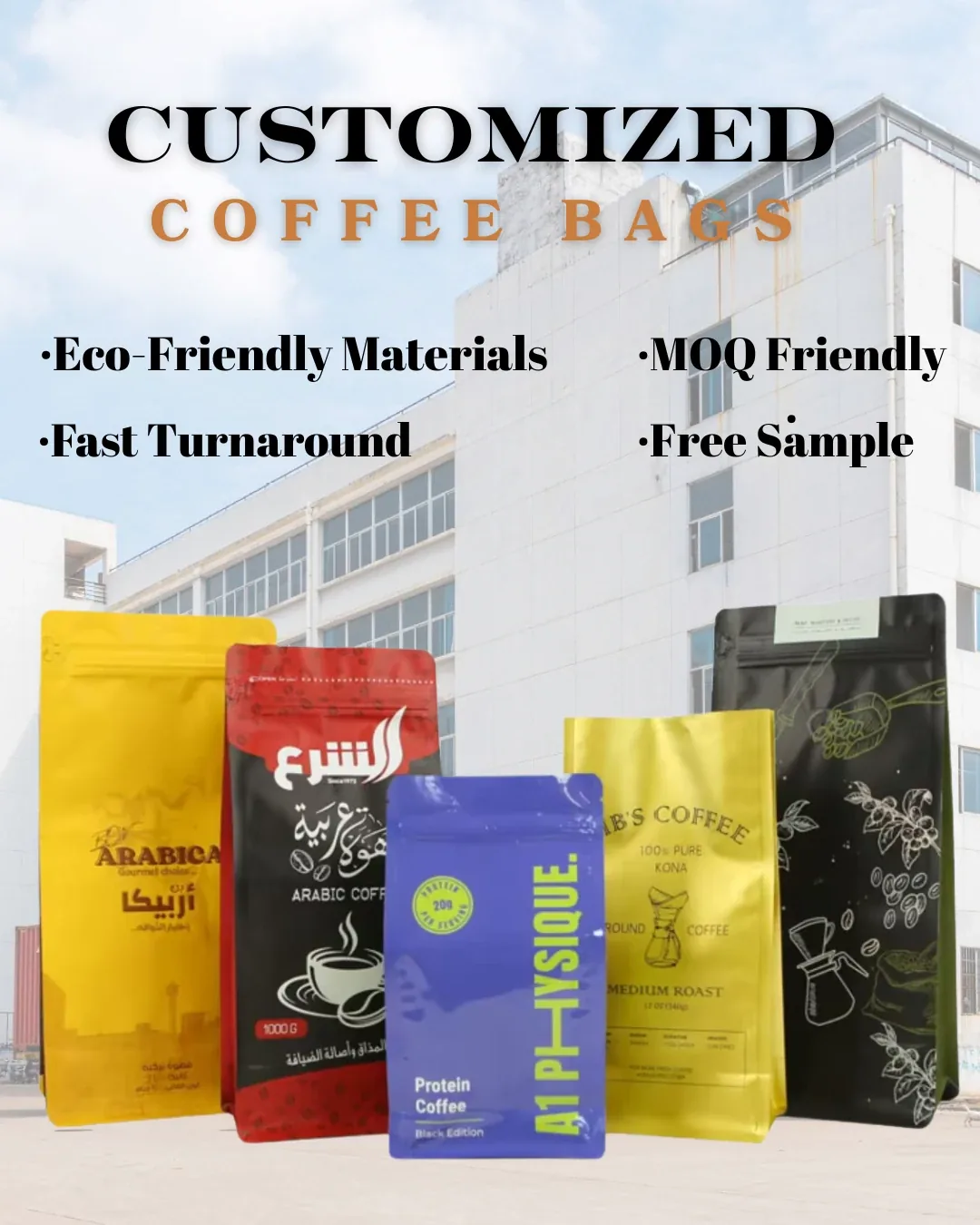
Flat bottom pouches give you five printable panels and the strongest shelf presence; side gusset bags are the space-efficient classic for 500 g to 1 kg wholesale; quad seal bags carry heavy fills without standing; and stand-up pouches are the most economical choice for smaller retail sizes. This guide compares the four main coffee bag types on structure, fill weight, shelf life and cost, so you can match the bag to your roast, your channel and your printing plan before you order custom coffee bags.
The Four Main Coffee Bag Types at a Glance
Every coffee bag style is a different trade-off between shelf presence, filling-line compatibility and unit cost. Here is how the four formats compare:
| Bag type | Structure and shelf presence | Common fill weights | Best suited for |
|---|---|---|---|
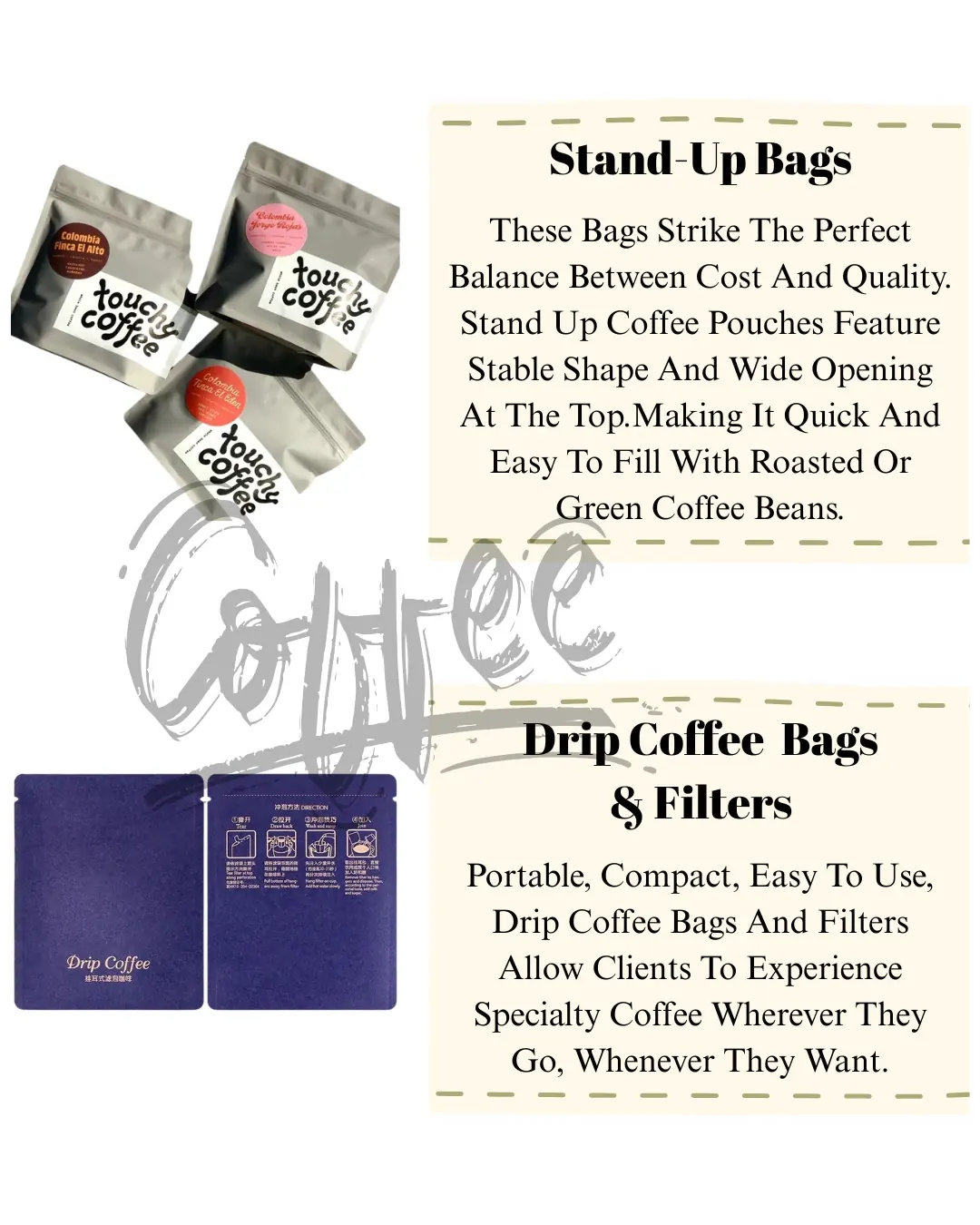
| Stand-up pouch (doypack) | Bottom gusset lets the bag stand when filled; economical | 100 g to 1 kg | Subscriptions, DTC, cafés, smaller retail sizes |
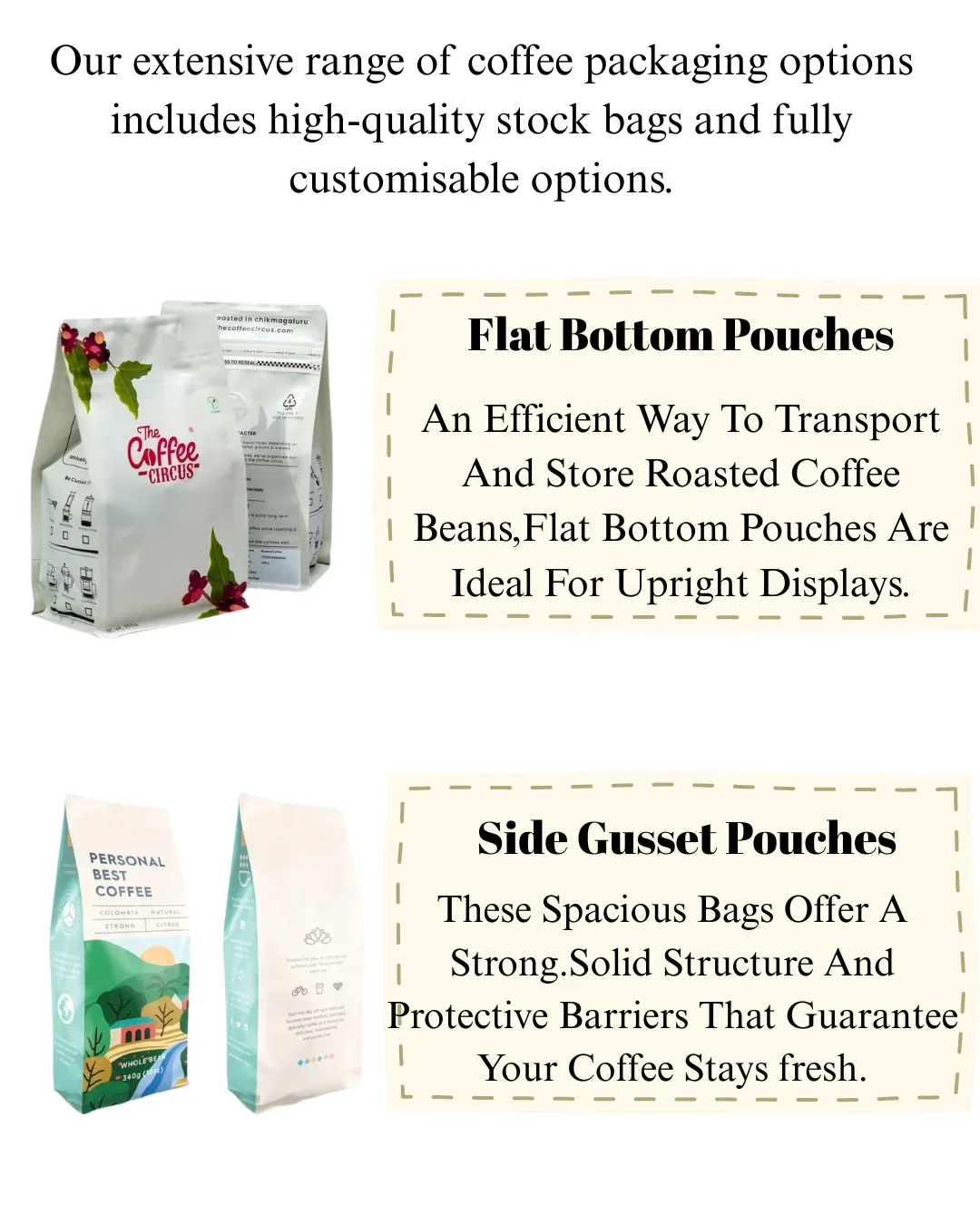
| Flat bottom (box pouch) | Rigid rectangular base; five printable panels; premium look | 250 g to 1 kg | Specialty retail, premium shelf placement |
| Side gusset | Classic brick shape; expands as it fills; ships compactly | 250 g to 5 kg | Wholesale, 1 kg café supply, traditional roasters |
| Quad seal | Four vertical seals carry the weight; block-like shape | 250 g to 2 kg | Automated filling lines, heavy whole-bean fills |
Flat Bottom vs Side Gusset: The Decision Most Roasters Face
These two formats dominate specialty coffee, and the choice usually comes down to retail presence versus filling and freight efficiency:
• Shelf presence: a flat bottom bag stands like a small box and prints on five panels, so your brand story, brew notes and certifications all get front-facing space.
• Filling lines: side gusset bags run smoothly on most vertical form-fill-seal machines, while flat bottom pouches need a bag style your co-packer can actually run.
• Freight: empty side gusset bags ship flatter and take less carton space than structured box pouches.
• Perception: flat bottom reads premium on the shelf; side gusset reads traditional and roastery-driven.
If you sell one hero blend at 250 g to 340 g in specialty retail, a flat bottom coffee bag usually earns its higher unit cost. If you move 1 kg bags to cafés every week, a side gusset bag keeps packaging cost and shipping volume down.
How Bag Type and Material Affect Shelf Life
Bag style sets the canvas, but the laminate sets the shelf life. Oxygen transmission rate (OTR) - how much oxygen passes through a square metre of film per day - is the number that matters. Typical industry reference values for common coffee bag structures:
| Inner structure | Typical OTR (cc/m²/day) | Typical shelf life with valve | Typical use |
|---|---|---|---|
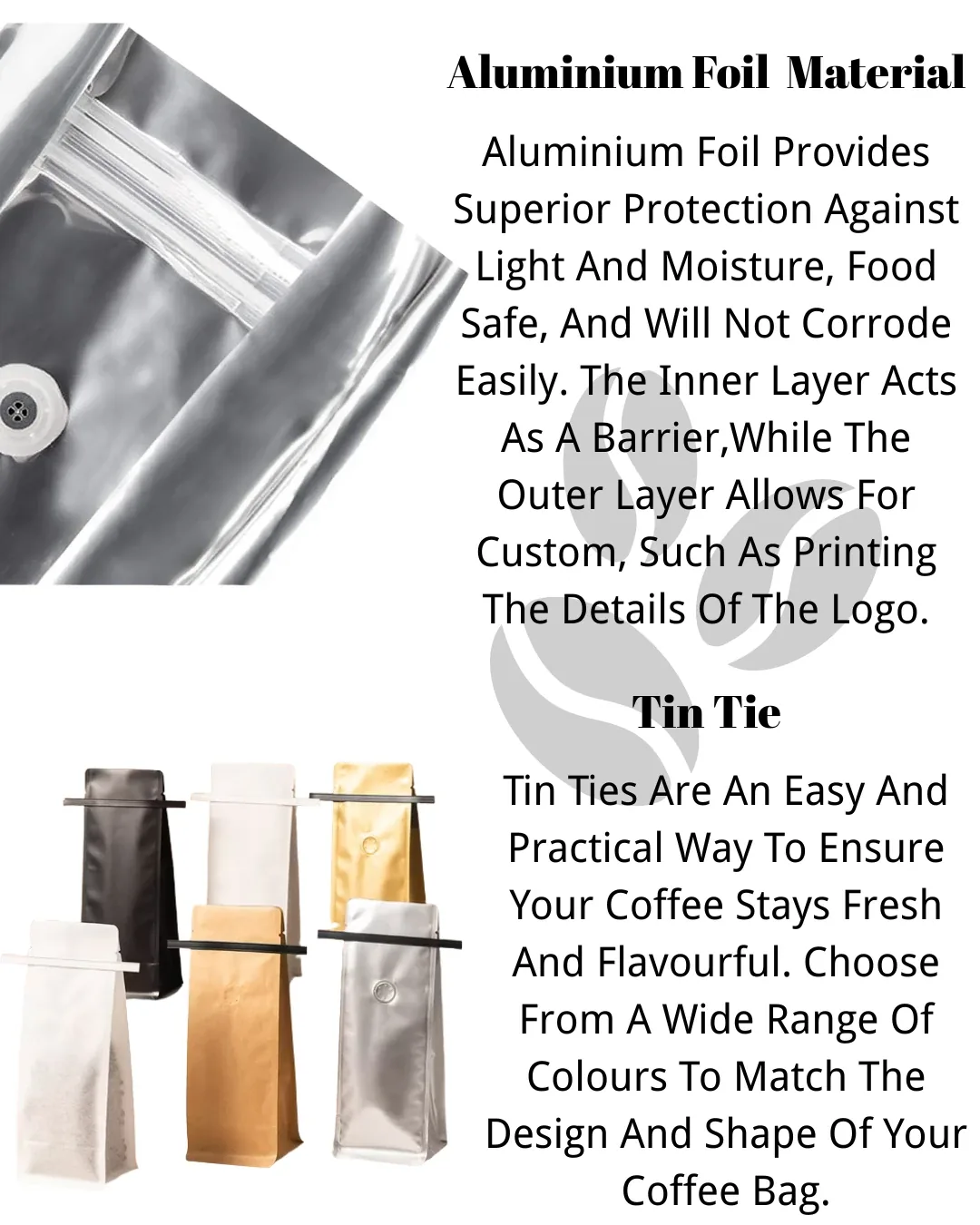
| Aluminium foil laminate | below 0.5 | 12 to 18 months | Export, long warehouse holds, premium retail |
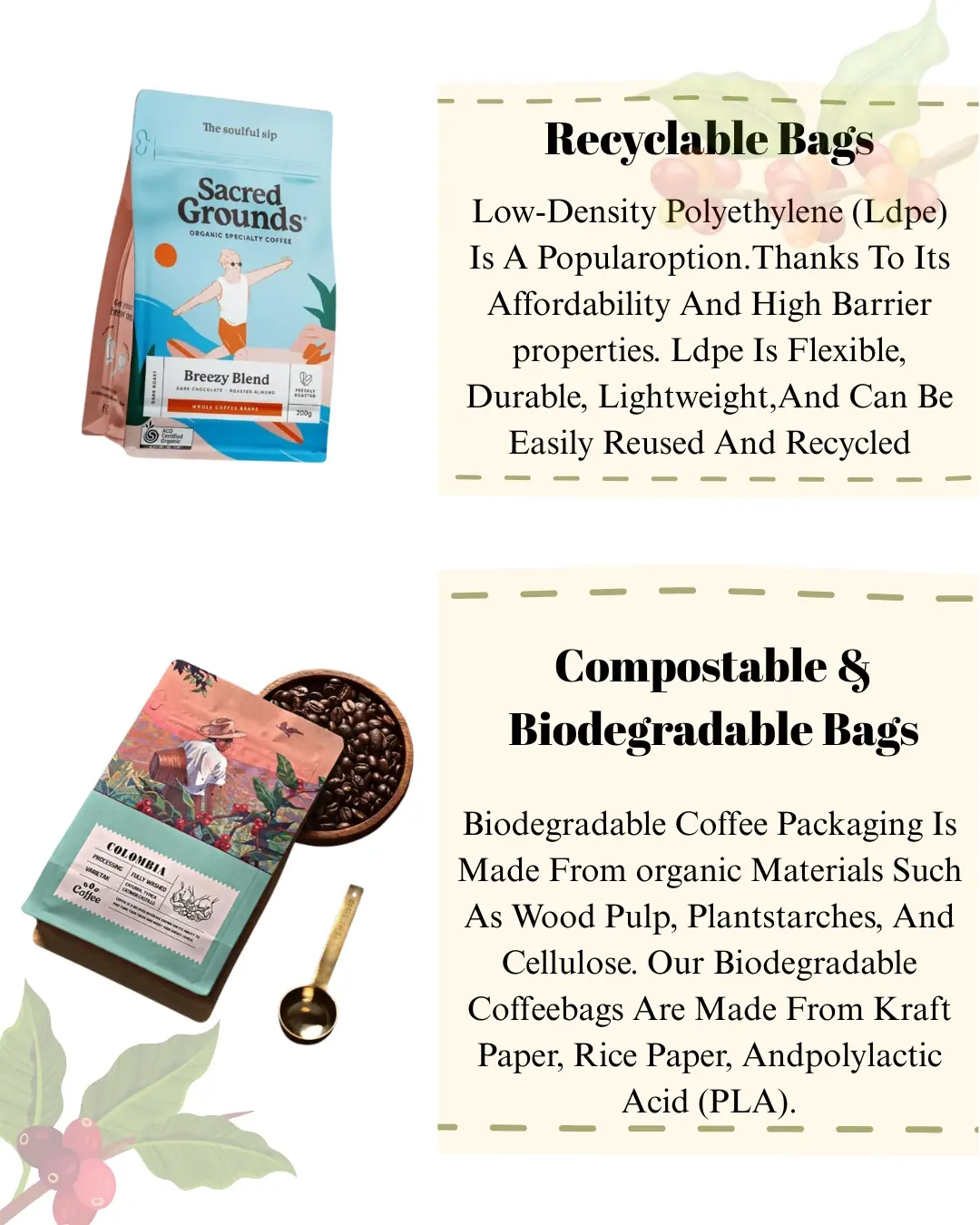
| Compostable plastic laminate | 2 to 3 | 8 to 12 weeks | Eco-positioned brands, fast-turn retail |
| Conventional PE laminate | 2 to 4 | 8 to 10 weeks | Subscription and DTC roasters |
| Kraft paper laminate | 5 to 8 | 6 to 9 weeks | Craft-look gift and café bags |
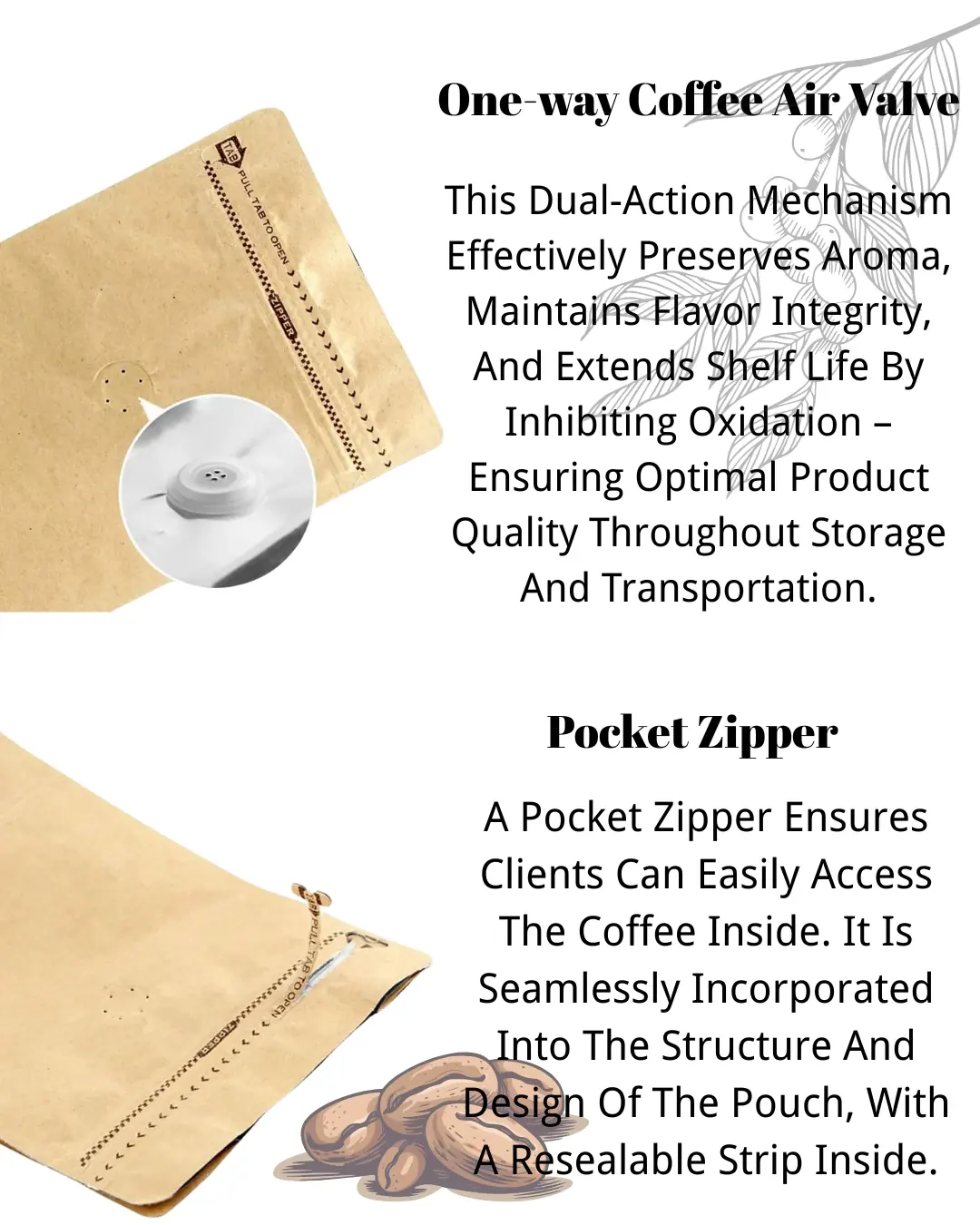
As a rule of thumb, ground coffee needs a tighter barrier than whole bean - a common development target is an OTR below 0.6 cc/m²/day for ground SKUs headed to retail. We compare the two barrier layers in detail in our metallic PET vs aluminium foil guide, and the one-way valve that works with any of these structures in our roaster's valve guide.
Which Bag Type Fits Which Channel
• Specialty retail (250 g / 340 g): flat bottom pouch, matte finish, valve and zipper.
• Subscription and DTC (250 g): stand-up pouch - lowest cost at small volumes, easy to mail.
• Café and wholesale (1 kg): side gusset or flat bottom with tin tie or pocket zipper.
• Automated filling lines: quad seal or side gusset roll stock, sized with your machine supplier.
• Samplers and microlots: small stand-up pouches, digital printing, no valve needed under 100 g.
Our full custom coffee packaging guide covers boxes and cans as well, and our custom coffee packaging bags page shows the formats we offer with digital and gravure printing.
FAQ
What is the difference between flat bottom and quad seal coffee bags?
A flat bottom pouch has a rigid rectangular base and stands on the shelf with five printable panels. A quad seal bag has four vertical seals that carry the fill weight, giving a block-like shape that usually does not stand on its own; it is common on automated filling lines.
Which coffee bag type is cheapest?
Stand-up pouches are generally the most economical because the structure uses less material and runs on the widest range of filling equipment. Flat bottom bags cost more per unit but add shelf presence that often pays back in retail.
Do all coffee bag types need a degassing valve?
No. Bags under roughly 100 g of fresh-roast coffee release too little CO2 to need one. For 250 g and above, a one-way valve lets you pack on roast day without the bag ballooning.
Can I mix bag types in one order?
Usually yes, but MOQ applies per design and size. Talk to your supplier about which formats share film structures so you can split a run economically.
Which bag type is best for 1 kg wholesale coffee?
Side gusset bags are the classic 1 kg format: compact to ship, strong seams, and easy to stack. Flat bottom 1 kg bags work well when you want the bag to stand in a café display.
Need help matching a bag type to your roast and channel? Send us your fill weights and sales channels - we offer free size recommendations, samples and dielines for all four formats. FOB Shantou.